
Environmental Sustainability and You
Discovery Museum cares about environmental sustainability because we care about the wellbeing of all children. We act on climate and other environmental challenges because it is one of the biggest opportunities to improve the health and lives of children today and into the future.
Sometimes acting on behalf of the environment can seem daunting. Here are three ways you can build environmental action into your everyday life.
- Eat less meat. Livestock, particularly cattle, account for 14-18% of CO2 emissions and 32% of methane emissions. Switching most of your beef consumption over to chicken can already go a long way in reducing these emissions. You could also try “meatless Monday,” a global campaign to reduce meat consumption for our planet, and also our health. Something to try: Challenge yourself to find exciting vegetarian meals and then share them with your family, friends, and neighbors!
- Buy used. While we are in the middle of a renewable energy revolution, the majority of electricity across the world is made by burning fossil fuels. The less we buy overall, and the more we buy used, the less demand we put on industrial systems that emit CO2. Something to try: Thrifting! If you are someone who loves to thrift, bring a friend along next time and make a day of it. Or, maybe one of your friends or family members is the expert thrifter and you can tag along. Bonus points for a vegetarian lunch together!
- Talk about climate change. In the US, a majority of adults are concerned about climate change but only 35% talk about it regularly. In part, this is because climate and other environmental problems are presented to us as divisive. If we can become comfortable and confident talking about climate change, we can increase engagement with the problem and potentially empower others to have more conversations as well. Something to try: Not sure where to start? Explore the Yale Program on Climate Change Communication.
Looking for More Solutions Resources?
Project Drawdown, led by climate scientist and communicator, Jonathan Foley, works to analyze current trends in energy and climate solutions to help the public and institutions prioritize where to put their efforts.
The Climate Action Playbook, developed by a national cohort of children’s museums, is a resource to help both museum professionals and caregivers (see the “For Visitors” sections) consider climate in their interactions with children. Grouped by ages from birth to age 8, there are lots of tips and tools about things to think about and fun activities to do together.
What Can Kids Do?
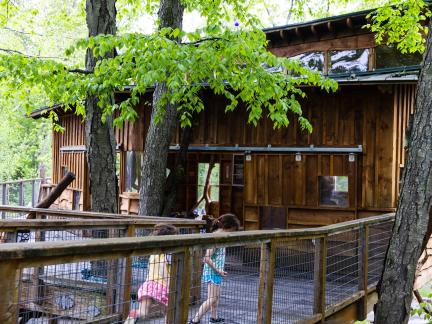
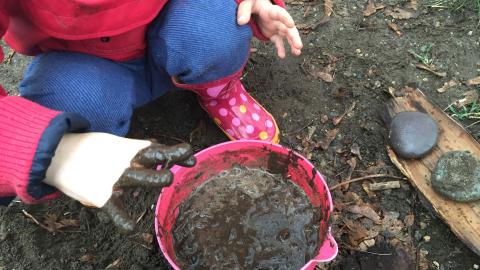
For children, especially under the age of 10, the most important thing is for them to spend time outdoors with trusted adults exploring, playing, and building their relationship with the natural world near where they live. Developing this care for nature is the first step toward eventually thinking about advocacy and we know that spending time outdoors as a child is the number one predictor of pro-social, pro-environmental values and behaviors when they are older.
Anything else?
Check out the Backyard and Beyond section of our Discovery at Home page for LOTS of fun ideas for activities you can do at home with just a few simple materials, from Icy Investigations to Making a Bee Hotel to Things to Do with a Rock!