
Principles & Goals
Earlier in June I had the great privilege of assembling many of our advisors on this project in the same room to discuss topics of education, early childhood, parenting, science, community, and more. The conversation was thought provoking, inspiring, and informative. The more I think about this meeting, the more amazing it seems, and the more I appreciate and am in awe of this fantastic group of advisors.
Over these last few weeks I have been working to sum up the conversations. What were the big ideas and questions that came up? What I was left with were seven major guiding principles to keep in mind as we work to ensure the project is a success, and six goals to measure our work against. Here is an abbreviate list of the guiding principles:
Parents as audience
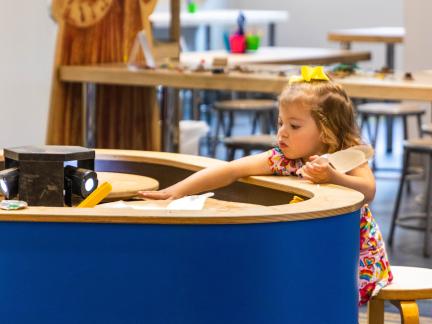
Parents have very specific wants and needs. It will be instantly visible upon entering that this is a space designed for adults with young children (0-3 years old). Seating and other amenities will be designed with adults in mind.
Respecting parents
Parents come to the museum full of experience and wisdom and are doing their best to be a great parent given the resources they have available. We will respect the expertise of parents and meet them where they are at when providing any resources or support. This creates a no judgement zone that recognizes different approaches to parenting and differences in the ability of different children.
Science and research as guide
Exhibit environments, signage, and experiences will be grounded in science related to early brain development and education.
Learning about learning
Real learning and development happens through play. Parents will be given information to help look for cues and signs for reflecting on and appreciating when learning is happening within their own child/children.
Skill building, not advice
Having identified ways in which their child is learning, parents are able to utilize this information to extend interactions, appreciate where their child is developmentally, and encourage new learning opportunities.
Space for all
There is a wide range of backgrounds, cultures, and abilities represented by the parents and children making use of this space. Accordingly we will provide a wide range of experiences to match the interests and needs of this diverse audience.
0-3 is a new targeted audience for TDM
TDM has never had a space exclusively for children 0-3. Design choices will be made unique to this space to accommodate this specific audience that will not occur anywhere else in this museum, while still maintaining our own philosophy of hands-on learning and discovery learning.
I also put together a first draft of goals based upon these conversations. After talking to our evaluators I have some significant work to do still on refining them. Many could be much more specific, is this a goal of a program/exhibit/sign, is this a goal that will maybe change during the process or after the new space is open? Keeping in mind that this is a working list, here are the goals (as with the guiding principles, these have been abbreviated and are in no particular order):
TDM will portray a very positive image of young children
All parents & caregivers will feel welcome
Science on development will be accurate & influence exhibit choices
Caregivers will recognize specific behaviors in their child/children
Caregivers will recognize the importance of their relationship with their child/children
TDM will better welcome visitors with very young children
This project is incredibly exciting and I’m excited for all the conversations and learning to come. As we spend all these hours thinking about the important role of caring adults in the lives of children, I leave this post with a quote from Rachel Carson:
“If a child is to keep alive his inborn sense of wonder, he needs the companionship of at least one adult who can share it, rediscovering with him the joy, excitement and mystery of the world we live in.”
Here’s to wonder, joy, excitement, and mystery – have a great weekend!

Comments
Add new comment