
The Value of Wondering
"Why?” “Why?” “But, why?”
Does this sound like your child? Is she interested in rocks, or weather, or dinosaurs, or plants? Does he ask questions about things that you aren’t quite sure that you can explain? This happens to most parents—don’t be intimidated! Instead, seize the opportunity to encourage his or her interest. If you’re not sure of the answer to a “Why?” question, instead of changing the subject, seize the opportunity to ask your child, “What can we do to find out?” You will be modeling skills and strategies that are very important for lifelong learning.
Use your experiences and those of your child to find possible explanations, answers, and connections. Be honest if you don’t know, and even if you do know, ask “Why do you wonder?” Observe and ask questions about similar phenomena. Look for different ways you can explain what is happening. You will be surprised by the insights and connections you will make together. Observe, experiment, and use books and the internet as resources for activities and springboards for discussions. The exact answer to the “why” question may not be as important to your child as exploring ideas with you.
Let your child’s questions lead your explorations. Together you will make wonderful discoveries about different subjects and yourselves. A child’s sense of wonder and curiosity can be the foundation for becoming a lifelong learner. Rachel Carson said it best in her book, The Sense of Wonder:
If a child is to keep alive his inborn sense of wonder… he needs the companionship of at least one adult who can share it, rediscovering with him the joy, excitement and mystery of the world we live in.
Your child’s Why’s are not an annoying phase to get through, but can be natural springboards to nurture and develop valuable 21st century learning skills such as inquiry, collaboration, creative thinking, initiative, teamwork.
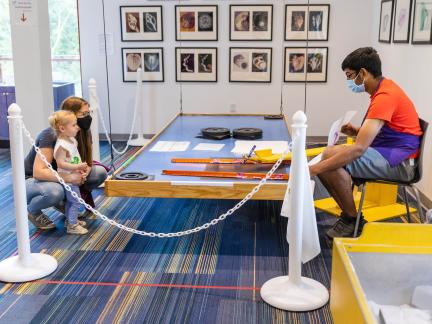
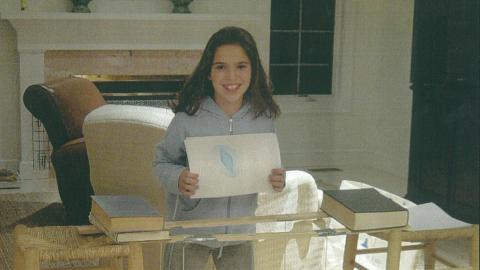
The Discovery Museums’ exhibits are designed with you and your child’s wonder and curiosity in mind. The exhibits are open-ended and can be used and enjoyed in many ways. We hope that your discoveries do not end with your visit—perhaps you and your child will be inspired to try a few things at home. The photo that accompanies this post is of a visitor who was inspired to make her own harmonograph table!
We hope you leave The Discovery Museums with your sense of wonder and curiosity enhanced.
Comments
Add new comment